Brain circuit driving cold pain after chemotherapy
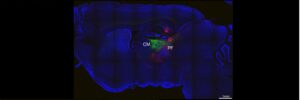
Anatomical tracing shows pain sensitive neurons in the thalamus of mice brain (Image: Mousmi Rani)
Researchers from IISc and TCG-CREST, CHINTA, Kolkata have identified a brain circuit that controls both the physical sensation and emotional distress associated with cold allodynia – a condition in which normally harmless cold temperatures are perceived as painful.
Their findings, published in Cell Reports, could help guide the development of new therapies for cold allodynia, a debilitating symptom of chemotherapy-induced peripheral neuropathy (CIPN) experienced by many cancer patients receiving chemotherapy.
Using advanced neuroscience techniques, including in-vivo calcium imaging, electrophysiology, optogenetics, and chemogenetics, the researchers investigated how pain signals are processed in the brain using a mouse model of CIPN. They discovered that a pathway connecting the lateral parabrachial nucleus (LPBN) to the parafascicular (PF) region of the thalamus becomes highly active during cold allodynia. Activating this pathway intensified pain-related behaviours and negative emotional responses, while suppressing it reduced sensitivity to cold and improved the animals’ ability to tolerate cold temperatures.
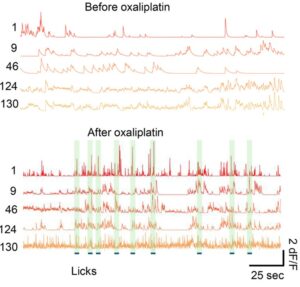
How neural activity changes in the pain neurons in the thalamic areas in animals suffering from neuropathic pain (Image: Mousmi Rani)
The team, led by Arnab Barik at the Centre for Neuroscience, also found that a nearby brain region, the centromedian (CM) thalamus, primarily contributes to the emotional or motivational aspects of pain, whereas the LPBN–PF pathway regulates both the sensory and emotional components of cold pain.
These findings provide new insights into the brain mechanisms underlying cold allodynia and identify the LPBN–PF circuit as a promising target for future therapies aimed at relieving this debilitating condition.

From left to right: Mousmi Rani, Prannay Reddy, Arnab Barik
REFERENCE:
Reddy P, Rani M, Prajapati JM, Koul S, Babu NP, Jabin N, Okuda T, Samineni V, Jain A, Barik A, Parabrachial inputs to the parafascicular thalamus drive sensory and affective-motivational responses to cold-allodynia in mice, Cell Reports (2026).
https://www.cell.com/cell-reports/fulltext/S2211-1247(26)00659-5?uuid=uuid%3A18314ef9-1b10-446d-a813-4bedbd316d06
LAB WEBSITE:
https://sites.google.com/view/molecules-cells-and-circuits/home



