15 October 2026
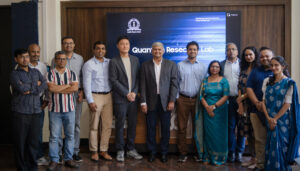
Samsung Semiconductor India Research (SSIR) and the Indian Institute of Science (IISc) today inaugurated the Quantum Research Lab at IISc, marking a significant step towards strengthening India’s capabilities in quantum technologies and advanced semiconductors.
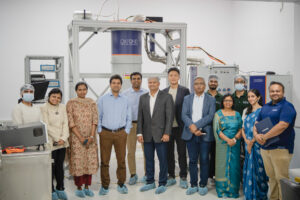
Established with SSIR’s CSR support, the lab supports research across qubit characterisation, cryogenic electronics, quantum-device reliability, single-photon sources and detectors, and the integration of advanced semiconductor materials with quantum systems. It has also catalysed research on 2D-material-based quantum devices and emerging device concepts under cryogenic conditions within IISc’s Department of Electronic Systems Engineering.
This initiative reflects Samsung and IISc’s shared vision of building indigenous capabilities in frontier technologies by bringing together advanced research infrastructure, academic expertise and talent development.
Creating access beyond IISc
A key objective of the Quantum Research Lab is to extend the benefits of this advanced infrastructure beyond IISc. Through structured training and research exposure, the facility aims to provide researchers and students from institutions across India with opportunities to engage with quantum technologies and specialised experimental infrastructure that may otherwise be inaccessible due to high capital and operational requirements. This approach is designed to help build a broader national talent pool capable of contributing to India’s emerging quantum technology ecosystem.
The collaboration also strengthens the intersection between quantum technologies and advanced semiconductor research, creating opportunities to explore new materials, devices and architectures that could contribute to future technology platforms.
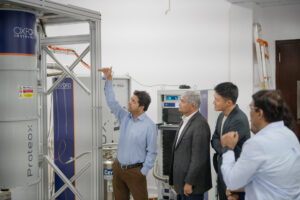
Mr Rajesh Krishnan, Managing Director, Samsung Semiconductor India Research, said: “Semiconductors and quantum technologies are well poised to be the next wave of innovation, making talent and research capabilities in this domain critical to India’s technology ambitions. Our partnership with IISc demonstrates how industry and academia collaboration can create lasting impact by bringing together advanced infrastructure, education and access. We are proud to see the Quantum Research Lab reach this milestone and enable our national ecosystem to engage in research that will shape our future.”
Connecting quantum research with talent development
The IISc–SSIR collaboration will also focus on selected learning modules on quantum materials and devices, cryogenic electronics, and qubit technologies as part of another skill-building programme: The India Semiconductor Workforce Development Program (ISWDP), which addresses critical gaps in semiconductor workforce capabilities across device physics, process development, modelling, simulation, characterisation, and reliability.
Prof Govindan Rangarajan, Director, Indian Institute of Science, said: “Industry-academia partnerships create the greatest impact when they build lasting infrastructure while expanding access to knowledge. Samsung’s support has enabled IISc to strengthen both frontier quantum research and semiconductor workforce development. These initiatives complement IISc’s larger role in advancing national capabilities in quantum computing and next-generation semiconductor technologies.”
This integrated approach aims to create a wider national talent pipeline while strengthening advanced research capabilities at IISc – connecting the journey from classroom learning and simulation to semiconductor experimentation and frontier quantum research.
Prof Mayank Shrivastava, Chair, Department of Electronic Systems Engineering, IISc, and lead for the two initiatives, said: “Our vision was to build an end-to-end capability – from semiconductor & quantum education at the national scale to advanced research infrastructure. ISWDP is enabling thousands of learners to gain practical exposure to semiconductor workflows, while the Quantum Research Lab is advancing research in 2D-material-based quantum devices such as qubits and single photon detectors. Our next step is to push the boundaries of the frontier quantum and semiconductor technologies using next generation material platforms like 2D materials.”
The IISc–SSIR collaboration demonstrates how strategic CSR investment can contribute to a long-term investment in frontier research by combining research infrastructure, computational capacity, workforce development, and pathways to emerging technologies.
About Samsung Semiconductor India Research
Samsung Semiconductor India Research (SSIR), Bengaluru, is part of the global network of Samsung Electronics Co., Ltd focused on semiconductor component solutions across areas including System LSI, Memory, and Foundry. SSIR contributes to Samsung’s global innovation roadmap through research and development in advanced semiconductor technologies and related systems. Samsung Semiconductor’s citizenship and CSR initiatives in India focus on enabling people through education, skills, innovation and technology-led social impact.
About the Indian Institute of Science (IISc)
The Indian Institute of Science (IISc) was established in 1909 by a visionary partnership between the industrialist Jamsetji Nusserwanji Tata, the Mysore royal family, and the Government of India. Over the last 117 years, IISc has become India’s premier institute for advanced scientific and technological research and education. Its mandate is “to provide for advanced instruction and to conduct original investigations in all branches of knowledge as are likely to promote the material and industrial welfare of India.” In 2018, IISc was selected as an Institution of Eminence (IoE) by the Government of India, and it consistently figures among the top Indian institutions in world university rankings.
Media contacts
Indian Institute of Science (IISc): Office of Communications | news@iisc.ac.in
Samsung Semiconductor India Research (SSIR): Abanti Banik/abanti.banik@samsung.com



