16 November 2026
Kavi Bharathi R
Tuberculosis (TB), caused by the bacterium Mycobacterium tuberculosis, continues to remain one of the world’s most persistent health challenges. What’s particularly alarming is the bacterium’s growing resistance to isoniazid, the frontline drug used to treat the disease.
Researchers at the Department of Biochemistry, Indian Institute of Science (IISc), have now identified a strategy to restore the effectiveness of isoniazid – by combining it with another antibiotic, vancomycin. They found that this combination can reverse isoniazid resistance in clinical isolates of M. tuberculosis and reduce bacterial burden in a mouse model.
“Isoniazid resistance poses a major challenge in the treatment of TB. To tackle this problem, we started exploring ways to rescue the drug by reversing resistance,” says Nagasuma Chandra, Professor at the Department of Biochemistry and corresponding author of the study published in Microbiology Spectrum.
“Although several antibiotic combinations are available for TB treatment, we continue to face challenges due to drug-resistance. Our study identifies a drug treatment strategy that can reverse resistance to isoniazid, an otherwise highly effective antibiotic,” adds Sukriti Pal, PhD student at the Department of Biochemistry and first author of the study.
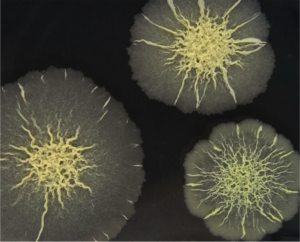
Colonies of M. tuberculosis growing in an agar plate (Photo: Shalini Birua)
The researchers tested the combination of isoniazid and vancomycin against clinical isolates of M. tuberculosis obtained from patient sputum samples with drug-resistant TB, in collaboration with the National Tuberculosis Institute, Bengaluru. The isolates showed a broad range of isoniazid resistance, which allowed the researchers to test the combination against various resistance mechanisms.
Isoniazid is a prodrug – it requires activation by a bacterial enzyme to be effective. However, mutations in specific genes can create resistant bacteria that block this activation pathway. Likewise, vancomycin has difficulty penetrating the impermeable cell wall in M. tuberculosis. When used together, a loss of cell wall integrity allows vancomycin to enter the cell and start killing the bacteria. The combination substantially reduced bacterial burden compared to the individual drugs. Most of the isolates showed more than 90% reduction in bacterial growth under the combination treatment. This included isolates resistant to isoniazid as well as multidrug-resistant (MDR) isolates.
The researchers then tested the drug combination in a mouse model infected with an MDR M. tuberculosis in collaboration with Amit Singh, Professor at the Centre for Infectious Disease Research (CIDR) and Department of Microbiology and Cell Biology (MCB), IISc. After 10 days of treatment, neither isoniazid nor vancomycin alone produced a significant reduction in bacterial burden. However, the combination resulted in an approximately 10-fold reduction in bacterial load both in the lungs and spleen. Histopathological examination revealed that the combination treatment lowered the number of lung granulomas.
The team is currently working to advance this combination for clinical trials. “Before the combination can be considered for use in patients, its safety and efficacy need to be studied much more extensively. Clinical trials need to be conducted on drug-resistant TB cases,” says Pal.
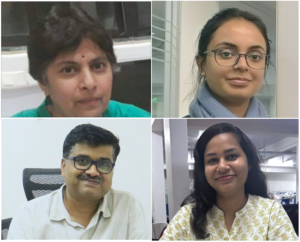
Authors of the study: (left to right) Nagasuma Chandra (corresponding author), Amit Singh (co-author), Sukriti Pal (co-author), Shalini Birua (co-author)
REFERENCE:
Pal S, Birua S, Suhas KS, Nandan R, Thakur C, Anand K, Jain Agrawal S, Somashekar N, Singh A, Chandra NC, Vancomycin rescues sensitivity to isoniazid in clinical isolates of drug-resistant Mycobacterium tuberculosis, Microbiology Spectrum (2026).
https://doi.org/10.1128/spectrum.00173-26
CONTACT:
Nagasuma Chandra
Professor
Department of Biochemistry
Indian Institute of Science (IISc)
Email: nchandra@iisc.ac.in
Phone: +91 080-2293 2892
Website: https://proline.biochem.iisc.ac.in/chandralab/index.php
NOTE TO JOURNALISTS:
a) If any of the text in this release is reproduced verbatim, please credit the IISc press release.
b) For any queries about IISc press releases, please write to news@iisc.ac.in or pro@iisc.ac.in.



