DDX3X syndrome reveals neurodegeneration clues
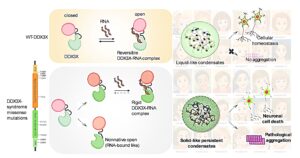
DDX3X syndrome-associated missense mutations disrupt RNA-driven conformational dynamics and phase separation, leading to neuronal death and pathological aggregation (Image: Kesavardana lab)
Scientists at IISc have uncovered how mutations in DDX3X – one of the most common genetic causes of intellectual disability in women – damage brain cells. Beyond explaining a rare neurodevelopmental disorder, the findings provide new insights into cellular mechanisms that are increasingly linked to neurodegenerative diseases like Alzheimer’s disease.
DDX3X is an essential protein that helps cells process RNA and mount a healthy response to stress. Although several disease-causing mutations have been identified, how they disrupt neuronal function has remained unclear.
The new study, led by Kesavardana Sannula at the Department of Biochemistry, reveals that these mutations do not simply reduce DDX3X function. Instead, they alter the DDX3X’s structure, causing it to become trapped in abnormal stress granules – temporary structures that normally form during cellular stress and disappear once the stress is removed. Mutant DDX3X forms persistent, solid-like granules that fail to dissolve, ultimately triggering neuronal cell death.
By combining computer modelling with lab experiments, the researchers discovered that the mutations change how DDX3X binds to RNA. They also found that some disease-associated mutations promote β-amyloid aggregation, a hallmark of Alzheimer’s disease, suggesting that disrupted DDX3X function may contribute to broader mechanisms of neuronal degeneration.
The study provides the first molecular explanation of how diverse DDX3X syndrome mutations converge on a common disease pathway: abnormal protein-RNA condensates that lead to neuronal dysfunction. These findings strengthen growing evidence that defective RNA-protein assemblies are not unique to DDX3X syndrome but may represent a shared mechanism across several neurological disorders.
The work also points to a promising therapeutic direction. Instead of attempting to restore DDX3X activity alone, future treatments may be more effective if they prevent persistent stress granules from forming or restore their normal, dynamic behaviour. By identifying this previously unrecognised disease mechanism, the study establishes a foundation for developing targeted therapies for DDX3X syndrome while providing broader insights into the biology of neurodegeneration.
REFERENCE:
https://academic.oup.com/hmg/article/35/15/ddag066/8741518?searchresult=1
LAB WEBSITE:
https://kesavlab.wordpress.com/

Research team (Photo: Kesavardana lab)



